What it is
The tender is the boat's everyday transport at anchor. Common choices are a roll-up inflatable, air-floor inflatable or rigid inflatable boat (RIB) with fiberglass/aluminum hull. Tube material is usually PVC or chlorosulfonated polyethylene, commonly called Hypalon/CSM. Hypalon-type fabric generally tolerates tropical UV and repair well; PVC is cheaper and can be entirely adequate for shorter/lighter exposure.
The outboard is a small gasoline four-stroke, typically 4–15hp. A 6hp Yamaha weighs about 60–61lb, so safe lifting/stowage matters. Davits, foredeck lashings, halyards, lifting bridles, fuel tank/line, lock and chaps form part of the system. The dinghy must fit the deck or davit geometry without blocking the liferaft, visibility or emergency access.
Owner learning layer
a vehicle, lifting system and fuel system
Mental model
Tender utility depends on hull/tube condition, payload, propulsion, launching, secure ocean stowage and theft control. Assess the complete daily cycle: launch from a moving yacht, lower the engine, attach fuel, beach, lift, drain, hoist and secure. A dinghy that performs well but injures the crew during every lift is the wrong system.
Tradeoffs
A RIB planes, rows and handles chop better but is heavy and bulky; a roll-up is stowable and lighter but less efficient and may flex. Aluminum bottoms are light and durable on beaches but need corrosion isolation; fiberglass is smooth and repairable but heavier. CSM/Hypalon-type tubes generally suit long tropical UV exposure; PVC costs less and can be adequate if covered and maintained. A larger outboard planes with load but is heavier to lift, consumes more fuel and may force davit storage. Davits speed daily use but are vulnerable offshore; foredeck stowage is more secure but consumes working space.
Maintenance competence
Know rated persons/load, tube pressure, valve service, correct patch adhesive for the actual fabric and lifting-point limits. Inspect seams, transom bond, floor, drain, chaps and bridle. For the outboard, learn fuel shutoff/draining, oil and gear-lube changes, spark plug, impeller/cooling telltale, propeller shear protection and fresh-water flushing. Stabilize or rotate gasoline appropriately and store it safely. Practice hoisting with a controlled lifting rig and secure the tender for offshore loads independently of davits.
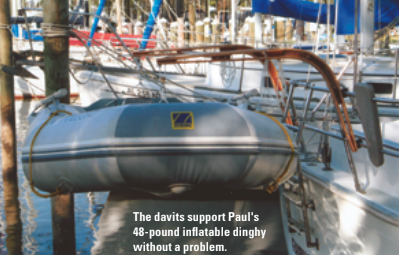
What to study: davits make launch and recovery convenient, but their loads enter the stern rail or deck and rise sharply in a seaway. Verify lifting-point strength, tackle, cross-bracing, tie-downs that stop movement, drainage, visibility, windvane/backstay interference and a separate offshore stowage plan. Image/source: Good Old Boat, “Dinghy-stowage solution”.
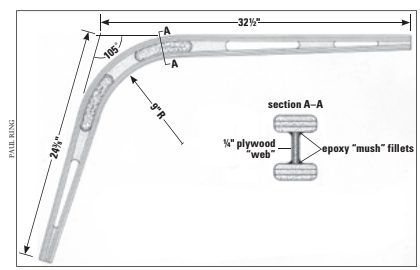
What to study: tender handling hardware is structural equipment, not furniture. A sound assessment needs dinghy and outboard weight, center of gravity, lifting geometry, attachment spacing, backing and dynamic-load allowance—not merely the davit maker’s headline capacity. Image/source: Good Old Boat, “Dinghy-stowage solution”.
Further learning: Study: Highfield warranty and maintenance guidance · Watch: Highfield maintenance video channel
Why it matters for an ocean crossing
Once cruising, the dinghy may be used daily for shore access, groceries, diving and emergency transport. A tropical-UV tube failure or unreliable carburetor is disruptive where parts are scarce. On passage, however, an unsecured tender becomes dangerous windage and a boarding-sea load. Safe ocean stowage matters more than rapid launching.
How age changes the answer
The age-band costs below are planning judgements derived from the unit and labor basis in “What it costs,” unless a source is named.
| Age at departure | What is normally justified | Typical cost |
|---|---|---|
| under 5 years | Pressure/valve/hull test and engine service; usually do nothing. | $0–$800 |
| 5–8 years | Patch/valves/chaps and carburetor/impeller service conditionally. | $300–$2,500 |
| 8–12 years | PVC replacement risk rises in tropics; Hypalon remains condition-led. | $1,000–$7,000 |
| over 12 years | Value conservatively until overnight pressure and sea trials pass. | $2,000–$9,000+ |
Tube material, UV exposure, inflation pressure and storage dominate. A covered ten-year-old Hypalon RIB may be excellent; a younger PVC dinghy left uncovered in the tropics may be near end of life. Outboard hours are less important than clean fuel, cooling, corrosion and regular use. Do nothing when the tender holds pressure, transom/hull are sound, engine starts cold and the complete passage-stowage plan works.
Repair, service or replace
Repair isolated punctures, valves, rubstrakes and chaps if surrounding fabric remains strong. Widespread sticky fabric, seam failure or rotten transom may make retubing/replacement more rational. Aluminum-hull corrosion and cracked welds need specialist assessment.
Service the outboard with oil, gear oil, spark plug, impeller as due, carburetor/fuel system and anode checks. Persistent old-fuel carburetor problems may need cleaning, not a new motor. Replace when corrosion, low compression, failed lower unit or parts scarcity makes it unreliable. Select power from dinghy rating, loaded use and lifting ability—not maximum badge alone.
What it costs
| Item | Unit | Bay Area 2026 |
|---|---|---|
| Tube patch/valve repair | job | $150–$700 (judgement) |
| Dinghy chaps | set | $1,200–$2,500 (judgement) |
| Outboard annual/baseline service | job | $400–$900 (judgement) |
| 2026 Yamaha F6 | motor | about $1,650–$1,900 current advertised |
| Highfield Classic 290 PVC | boat only | $4,645 posted |
| Highfield Classic 290 Hypalon | boat only | about $6,473 posted |
| Lifting bridle/crane/lashings | system | $500–$2,500 (judgement) |
| Quality 9–10ft tender plus 6hp | package | $6,500–$10,000 before davits/chaps |
Dealer setup, tax, shipping, fuel tank, cover, lock and registration may be extra. The $4,645 Highfield starting price includes boat only; material selection changes the price materially.
What a pre-purchase survey tells you
- Covered by a standard survey — inventory, obvious tube/transom/hull condition and possibly outboard start if requested. Tenders are often not launched or held inflated overnight.
- Not covered — 24-hour pressure test, valve leak isolation, loaded planing trial, outboard compression/cooling/lower-unit inspection and davit engineering. Treat an untested tender/outboard conservatively. A small-engine shop check ($200–$600) is worth it pre-purchase only when the package carries several thousand dollars of claimed value.
What to ask
- The broker or owner — “Send dinghy hull ID, material, year, invoice and every patch/valve/transom repair.” “Send outboard model/serial/year and service invoices.” “How is the dinghy and motor secured offshore, and is all lifting/cover/fuel hardware included?”
- The surveyor — “Inflate early and recheck pressure later, inspect seams/transom/hull/lifting points, cold-start the outboard in water, verify cooling and gears, and inspect the proposed passage stowage/load path.”
What you can see yourself
Inflate to maker pressure when cool, mark tube pressure and recheck after temperature correction. Spray soapy water on valves/seams. Flex fabric at cones and handles for cracking/stickiness. Stand on the transom and watch movement. Cold-start the outboard, confirm a strong cooling stream, select forward/reverse and inspect milky gear oil if the owner permits. Lift the 60lb motor yourself before choosing a lifting plan.
Getting the estimate wrong
Do not value “dinghy included” without material, age and pressure test. PVC is not automatically unacceptable, but Hypalon is the more credible year-long tropical baseline. Do not add a new outboard because the old carburetor is dirty. Avoid counting davits as part of boat price unless installed and structurally sound. A larger RIB may be impossible to stow safely on a 36ft monohull; fit is a configuration decision, not a luxury upgrade.
Recommended learning and sources
- Highfield warranty and maintenance guidance, including PVC versus CSM/Hypalon considerations
- Highfield Classic 290 materials, equipment and starting price
- Current Highfield Classic 290 PVC/Hypalon price comparison
- Yamaha F6 specifications and weight
- 2026 Yamaha F6 current advertised dealer price
- 2026 Yamaha F6 current retail range