What it is
The fuel system begins at one or more diesel tanks and includes deck fill, fill hose, vent hose, shutoff, supply and return lines, a primary filter/water separator, the engine's secondary filter and sometimes a transfer or polishing pump. A pickup tube draws fuel above the tank bottom. A Racor-type primary filter removes water and solids before fuel reaches fine injection equipment. Inspection ports allow cleaning. Tanks may be aluminum, stainless, mild/black iron, molded polyethylene or fiberglass compatible with diesel.
Black iron means weldable mild steel, not cast iron. It can last for decades when dry outside but corrodes where water sits. Aluminum suffers pitting where wet or chemically attacked. Polyethylene avoids metal corrosion but needs support and compatible fittings.
Owner learning layer
contamination control and tank reality
Mental model
The system must store diesel, admit replacement air, keep seawater and debris out, deliver fuel continuously at heel, and return warmed excess fuel without leaking. Water and sediment settle low in the tank while many pickups sit above the bottom, so a clean filter bowl does not prove a clean tank. Rough weather stirs dormant contamination into the pickup precisely when the engine is needed.
Tradeoffs
Metal tanks can be custom-shaped and baffled but their external surfaces and welds must remain dry and inspectable. Polyethylene resists corrosion but can deform, permeate odor and hide contents. A simple single-tank/single-filter system is easy to understand; dual switchable filters allow a change under way but add valves and opportunities for the wrong lineup. A polishing loop can clean bulk fuel but does not compensate for an inaccessible tank or rotten fill hose. Clear service access and a real inspection/cleanout port are worth more than a shiny filter head.
Maintenance competence
Know the tank material and capacity, every shutoff and valve position, both filter micron ratings, replacement element numbers and the engine’s bleeding procedure. Periodically inspect fill and vent hoses, deck-cap seal, line clamps and filter bowl; sample or drain water where the unit permits. Change filters on evidence and schedule, and carry several sets because contaminated fuel can consume them quickly. Practice switching filters and bleeding at the dock. Never use gasoline-rated assumptions on diesel hoses or introduce unapproved biocides casually; cure the water source and physically remove serious contamination.
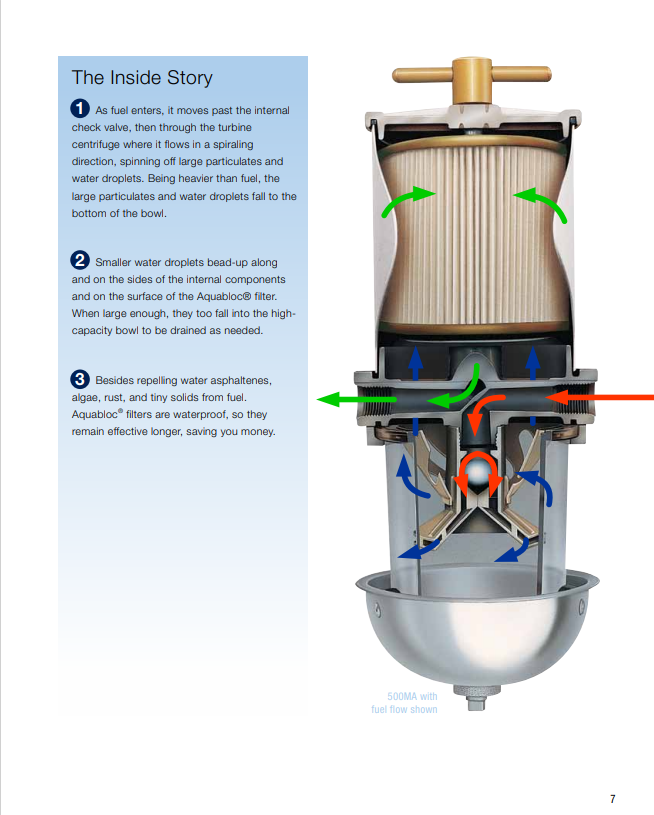
What to study: fuel first sheds larger water and debris into the clear bowl, then passes through the filter element. On the boat, trace deck fill, vent, tank pickup, shutoff, primary filter/water separator, lift pump, engine filter, injection system and return line; look for a safe way to drain and change filters. Image/source: Racor 500-series cutaway hosted by Erlandsons Brygga.
Further learning: Study: Racor filtration products and replacement elements · Watch: Replacing a Racor primary filter
Why it matters for an ocean crossing
Contaminated fuel commonly stops an otherwise healthy engine just when rough conditions stir tank sediment. A leaking supply line admits air and stalls the engine; a leaking tank creates fire, pollution and loss-of-range problems. Blocked vents can collapse a tank or starve the engine. Offshore reliability comes from clean tanks, reachable shutoffs, visible primary filtration, spare elements and the crew's ability to bleed the system.
How age changes the answer
The age-band costs below are planning judgements derived from the unit and labor basis in “What it costs,” unless a source is named.
| Age at departure | What is normally justified | Typical cost |
|---|---|---|
| under 10 years | Inspect supports/hoses, sample bottom fuel, change filters if due; often do nothing. | $0–$800 |
| 10–20 years | Check hose dates, tank exterior, vent/fill and contamination; clean only if evidence supports it. | $300–$2,500 |
| 20–30 years | Material/access become important; pressure/leak investigation for corrosion evidence. | $1,000–$8,000 |
| over 30 years | Budget tank replacement only when material, pitting, leakage or inaccessible contamination justifies it. | $3,000–$15,000+ |
Fuel does not know the tank's birthday. A dry, accessible 30-year-old polyethylene or sound metal tank may need nothing; a ten-year-old aluminum tank sitting in wet foam may leak. Hoses have printed type/date information and condition requirements. Replace from cracking, softness, permeation, wrong rating or age guidance—not simply with every old boat.
Repair, service or replace
Service means draining water, changing filters, cleaning bowls, sampling the tank bottom and confirming shutoff/vent flow. Polishing circulates fuel through filters; it can remove suspended water/solids but cannot scrape adherent sludge behind baffles or repair corrosion. Physical tank cleaning requires inspection access. Add a vacuum gauge or dual selectable filters only when the layout and operating plan justify them.
Repair accessible fittings, hoses and pickup/vent faults. Tank welding is specialist work after complete removal and gas-free preparation. Replacement may require cutting cabinetry; a custom tank's metal cost is often smaller than access labor. Portable jerry cans are reserve capacity, not a repair to an unsafe main tank, and must be secured and managed for UV, venting and transfer.
What it costs
| Item | Unit | Bay Area 2026 |
|---|---|---|
| Primary filter element | each | about $10–$40 posted retail, model dependent |
| Racor 500FG assembly | each | $288.23 posted retail |
| Vacuum gauge/fittings | set | $120–$250 parts |
| Fuel sample and basic polish | job | $500–$1,500 (judgement) |
| Tank physical cleaning | tank | $800–$2,500 (judgement; access/baffles) |
| USCG-rated diesel hose | per foot | $5–$15 (judgement by diameter/type) |
| Replace fill/vent/supply/return hoses | system | $1,000–$3,500 (judgement) |
| Custom 30–70gal tank | fabricated part | $2,000–$5,000 (judgement) |
| Tank replacement | installed | $4,000–$15,000+ (judgement; cabinetry dominates) |
Avoid using a national tank fabrication figure as a Bay Area installed total. BMC's $140/hour skilled rate means two days simply exposing and closing a tank add more than $2,000 before fabrication, fittings or disposal.
What a pre-purchase survey tells you
- Covered by a standard survey — accessible tank surfaces, supports, corrosion/leaks, fill/vent/supply hoses, shutoffs, filter bowl, fuel odor and general installation. The surveyor may take a visual sample but usually does not open or clean tanks.
- Not covered — internal tank inspection behind baffles, pressure testing, laboratory fuel analysis, polishing efficacy or removal of joinery. A fuel sample/technician visit ($300–$1,000) is worth doing before purchase if the boat sat for years, filters show sludge/water, the engine starves under load or the tank exterior is hidden and suspect.
What to ask
- The broker or owner — “State each tank's material, capacity, location and access; send fabrication/cleaning invoices and photos of all sides.” “When was bottom fuel last sampled and what was found?” “Send dates for fill, vent and engine hoses and every filter change.” “Has the engine ever stopped from contaminated fuel or air ingress?”
- The surveyor — “Identify tank material and mounting, inspect every accessible face and low point, verify fill/vent routing and shutoffs, examine the primary-filter bowl, and obtain a bottom sample if access permits.”
What you can see yourself
Smell lockers before opening the engine space. Rub a white paper towel under tanks, fittings and filters. Look for wet foam, white aluminum crust, rust flakes, pink/green staining at copper-alloy fittings, soft hoses and unprotected chafe points. Shine a light through a clear filter bowl for water beads or dark debris. Open the deck fill and check the cap seal; inspect whether the vent can admit boarding seas. Take a bottom sample into a clear jar and let it settle.
Getting the estimate wrong
Do not call every dark tank “diesel bug,” or prescribe polishing without evidence. Polishing old fuel is not the same as cleaning a baffled tank. Do not replace a tank merely because it is black iron or aluminum; material plus environment and condition matter. Conversely, do not count a shiny filter as proof the hidden tank is clean. Separate added cruising capacity from repair. Avoid double-counting engine secondary filters and labor in both engine and fuel-system baselines.