What it is
The drivetrain carries engine torque to the water. On a shaft-drive boat, the transmission turns a flexible or rigid coupling, which joins it to a stainless propeller shaft. The shaft passes through a stern tube and is supported near the propeller by a cutless bearing: a water-lubricated rubber-lined sleeve. Where the shaft enters the hull, a traditional stuffing box compresses packing around it and normally drips slightly underway; a dripless face seal such as a PSS uses polished sealing faces and a rubber bellows. The propeller may be fixed, folding or feathering.
A saildrive instead bolts the engine to a geared leg that passes through a large hull diaphragm. It has no long inboard shaft or stuffing box, but adds gear oil, seals, corrosion anodes and a manufacturer-specified diaphragm replacement question. These configurations must never share the same line items.
Owner learning layer
thrust path, alignment and sealing
Mental model
The propulsion train converts engine rotation into thrust and transfers that thrust into the hull. On a shaft boat, alignment must hold among engine/transmission coupling, shaft, stern tube, cutless bearing and propeller while flexible mounts move. The stern gland keeps water out around a rotating shaft. On a saildrive, the geared leg and diaphragm replace most of that path. Learn which component takes thrust, where water lubrication is expected and which parts are below the waterline.
Tradeoffs
A fixed propeller is simple and robust but creates drag under sail; folding and feathering props reduce drag and may improve reverse handling, but add moving parts, anodes, lubrication and setup. A traditional packed gland is inexpensive, tolerant and inspectable, yet intentionally drips and needs adjustment; a face seal keeps a dry bilge but depends on bellows condition, compression, clean faces and sometimes a vent or water feed. Shaft drive is widely understood; saildrive packages are compact and efficient to install but impose corrosion, seal and diaphragm discipline.
Maintenance competence
Inspect seal leakage, bellows/hoses and clamps, coupling fasteners, mount movement and shaft vibration. At haul-out, check prop condition, anodes, shaft play and line-cutter clearance. Learn the normal drip behavior of the actual seal—do not apply rules for packing to a face seal. After mount, coupling or shaft work, confirm alignment using the manufacturer/yard method and recheck afloat after the hull settles. Know how to stop serious ingress at the seal and carry the correct packing or emergency sealing material for the configuration.
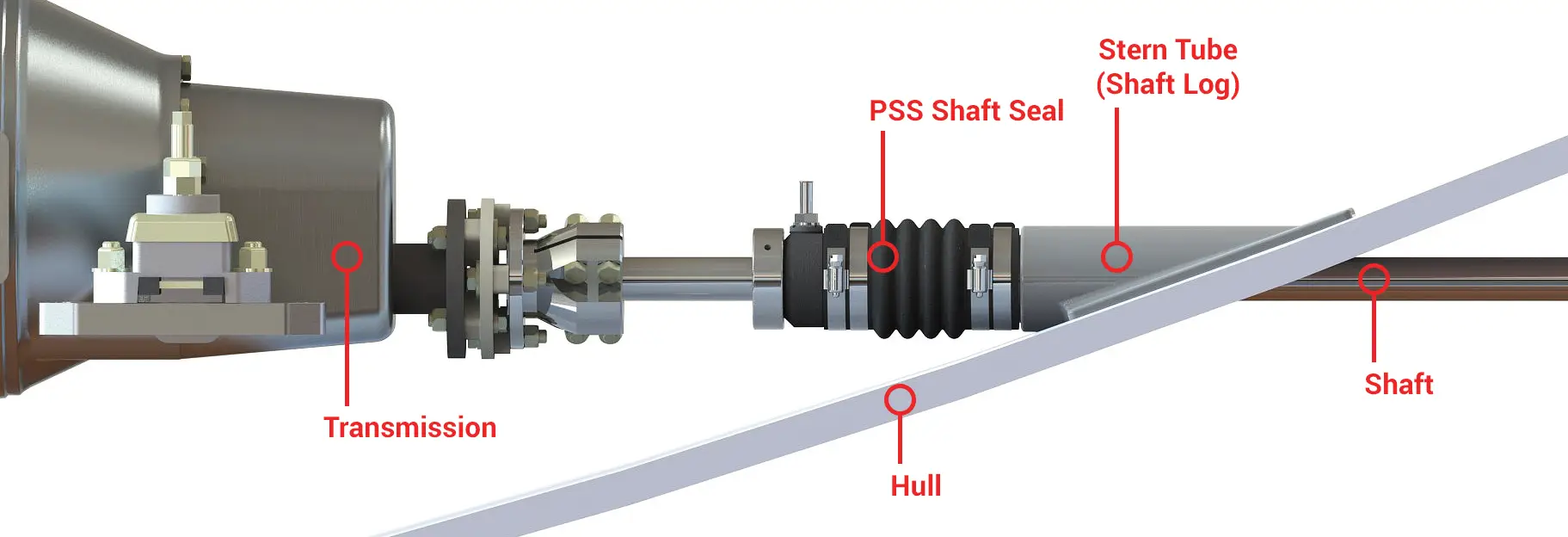
What to study: identify the rotating stainless rotor, stationary carbon flange, bellows, hose clamps and sealing faces. Then continue aft to the stern tube, cutless bearing and propeller, and forward to the coupling and gearbox. Image/source: PSS Shaft Seal, “How It Works”.
Further learning: Study: PSS shaft-seal maintenance guidelines
Why it matters for an ocean crossing
Misalignment destroys bearings, seals and transmissions. A failed coupling removes propulsion. A loose or lost propeller does the same. A failed shaft seal or saildrive diaphragm opens a flooding path; a bent shaft or worn bearing causes vibration and collateral damage. Rope around the prop can bend hardware or pull a shaft aft.
How age changes the answer
The age-band costs below are planning judgements derived from the unit and labor basis in “What it costs,” unless a source is named.
| Age at departure | What is normally justified | Typical cost |
|---|---|---|
| under 10 years | Haul inspection, check play/alignment/seal service interval; normally do nothing. | $0–$1,500 |
| 10–20 years | Expect bearing, packing or dripless-bellows service if records are absent; inspect prop and coupling. | $800–$5,000 |
| 20–30 years | Shaft wear, corrosion, coupling fit and stern-tube condition deserve measurement. | $2,000–$10,000 |
| over 30 years | Condition-led overhaul allowance; no automatic shaft replacement. | $3,000–$15,000+ |
Age is secondary to alignment, corrosion, rope strikes, hours and seal instructions. PYI specifies recurring inspection and time-based maintenance for PSS components; saildrive diaphragm intervals are model-specific and sometimes drive insurer demands. A straight shaft with tight bearing, good surface, sound coupling and correctly serviced seal may need nothing at 20 years.
Repair, service or replace
Service a stuffing box by adjusting or repacking it and inspecting the hose/clamps. Service a dripless seal according to its manual, including bellows and O-rings where due. Replace a cutless bearing when shaft play exceeds acceptable clearance or rubber is damaged. Align only after the boat has settled afloat; alignment can expose failed mounts or a bent shaft.
Prop repair can dress minor damage and correct pitch/balance. Replace a shaft when bent, deeply crevice-corroded, undersized or worn at the seal/bearing. A folding/feathering propeller is an upgrade, not a required repair when a correct fixed prop is sound. Saildrive work follows its own manual: oil, anodes, prop seals and diaphragm.
What it costs
| Item | Unit | Bay Area 2026 |
|---|---|---|
| Haul/launch and blocking | event | $1,000–$2,500 (judgement; yard/boat dependent) |
| Cutless bearing | part | $100–$350 (judgement) |
| Cutless bearing replacement | installed | $800–$2,500 (judgement) |
| Stuffing-box repack | job | $500–$1,500 (judgement) |
| Dripless-seal service/replacement | job | $1,200–$3,500 (judgement) |
| Engine/shaft alignment | job | $600–$1,800 (judgement) |
| Machine-shop coupling fit | job | $500–$1,500 (judgement) |
| New shaft, roughly 1–1.25in | installed | $2,500–$6,000 (judgement) |
| Propeller recondition | prop | $500–$1,500 (judgement) |
| New fixed/folding/feathering prop | part | $900–$5,000+ (judgement; folding maker quotes by vessel) |
| Saildrive diaphragm | installed | $4,000–$10,000 (judgement: access dominates) |
BMC posts $300/hour for travelift/crane use plus technician assistance. A rudder sometimes must be dropped to withdraw the shaft, adding travelift, labor and storage. Confirm whether prop removal, machining, anodes and realignment afloat are included.
What a pre-purchase survey tells you
- Covered by a standard survey — external prop damage, shaft play at the bearing, visible corrosion, accessible coupling, seal leaks, hose/clamps and vibration during sea trial. Haul-out is essential for the underwater observations.
- Not covered — dial-indicator shaft runout, shaft removal, coupling bore fit, prop scan/balance, internal transmission inspection and saildrive diaphragm disassembly. Specialist measurement is roughly $500–$1,500 before repair. Do it before purchase when vibration, a bent blade, impact history, oil/water contamination or severe play appears; otherwise a haul survey plus sea trial is enough.
What to ask
- The broker or owner — “Is this shaft drive or saildrive? Send invoices for cutless bearing, shaft seal/bellows or diaphragm, alignment, coupling, shaft and propeller work.” “Has it struck rope, a log or the bottom?” “For a dripless seal or saildrive, send the exact model and dated service record.”
- The surveyor — “Measure and report radial shaft play, inspect prop edges/hub and visible shaft for impact/corrosion, identify seal type and hose/clamps, observe vibration through the RPM range, and note whether the engine reaches rated RPM.”
What you can see yourself
At haul-out, grab the prop firmly and lift it sideways; visible clunk or large movement means bearing investigation. Look along blade edges for pink dezincification, bends, cracks and mismatched pitch. Inside, run a dry tissue under the coupling and seal. Rust fretting at coupling bolts, black rubber dust, a hose with one clamp, a compressed or cracked bellows and salt trails are clues. Under power, note whether vibration is tied to shaft RPM and whether it worsens sharply at one range.
Getting the estimate wrong
First identify shaft versus saildrive. Do not price a cutless bearing and stuffing box on a saildrive. Do not replace a fixed prop merely because a folding prop is desirable; separate reliability work from performance upgrades. Avoid counting haul-out in drivetrain, keel, rudder and through-hulls four times. A loose bearing does not prove the shaft is bent, and vibration may be prop, alignment, mount or engine-related. Quote seal parts and access labor separately.
Recommended learning and sources
- PSS shaft-seal maintenance and user guidelines
- PYI guide to alignment after running-gear work
- West Marine explanation of stuffing boxes, shaft seals and bearings
- PSS shaft-seal manufacturer
- Flexofold shaft and saildrive propeller selection process
- Berkeley Marine Center travelift, crane and labor rates
- ABYC standards program, including P-6 Propeller Shafting Systems