What it is
Ground tackle is the anchor, rode connecting it to the boat, bow roller, windlass, chain stopper and attachment point. Rode may be all chain or chain plus nylon rope. Scope is deployed rode length divided by vertical distance from bow roller to seabed—not water depth alone. A nylon snubber transfers load from chain to a cleat and adds elasticity. The windlass gypsy must match the exact chain diameter and pitch. A swivel is optional and must be correctly rated/aligned.
The bitter end is the inboard end of the rode. It should be secured strongly enough for normal handling but releasable/cuttable in emergency. The windlass retrieves the anchor; it should not be the sole device holding storm load. A chain stopper or snubber carries that load.
Owner learning layer
anchor system, not anchor brand
Mental model
Holding depends on anchor geometry, seabed, setting technique, scope and a load path through rode/snubber to a strong point. Scope uses total vertical distance from seabed to bow roller and changes with tide. In high load the chain’s catenary largely straightens, so geometry and elasticity matter more than the idea that heavy chain will always absorb shock. The windlass is handling machinery, not the overnight mooring point.
Tradeoffs
Modern scoop/roll-bar anchors generally set reliably in common bottoms, but bow fit, retrieval and specific seabeds matter. All-chain resists chafe and is compact on a gypsy but is heavy in the bow and transmits shock; a rope/chain rode is lighter and elastic but consumes space and needs chafe protection. Oversizing the primary anchor can add margin until handling and fit become unsafe. A vertical windlass can be compact; a horizontal unit may offer easier access. A swivel can solve rotation but introduces another loaded joint and must be correctly oriented and rated.
Maintenance competence
Know anchor/chain size, grade, length, gypsy match, shackles, swivel, snubber strength and attachment points. Mark rode length and calculate scope including tide and bow height. Practice controlled deployment, progressive setting, snubber transfer and manual retrieval. Keep hands and clothing out of the gypsy; use the boat—not the windlass motor—to break out a deeply set anchor. Inspect chain end-for-end, regalvanize or replace based on material loss, service the gearbox/motor/contacts, clear the locker drain and ensure the bitter end can be released in emergency.
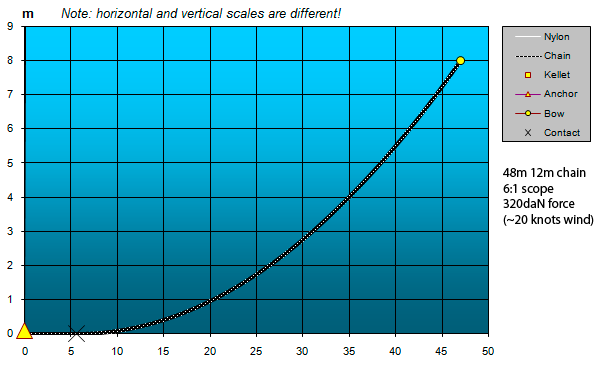
At 20 knots, much of the chain still lies on the seabed and the catenary is obvious. Image/source: Peter Smith, “Catenary & Scope in Anchor Rode”.
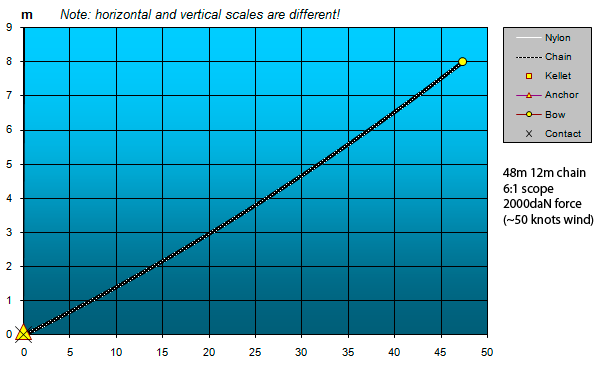
What to study: in strong wind the same chain is nearly straight, so adequate scope and an elastic snubber matter more than expecting chain weight to absorb surge. Trace the load from anchor through shackle, swivel if fitted, chain, snubber, bow roller, windlass bypass and strong point into the hull. Image/source: Peter Smith, “Catenary & Scope in Anchor Rode”.
Further learning: Study: Rocna deployment, setting and retrieval guide · Watch: Rocna anchor setting demonstration
Why it matters for an ocean crossing
On the Coconut Milk Run, the boat may anchor for months, sometimes in deep coral-fringed anchorages and squalls. Dragging can put the boat on a reef. A worn chain link, weak shackle, failed bow roller or unserviceable windlass can make recovery impossible. Oversized anchor alone does not fix undersized chain, weak cleats, poor technique or inadequate scope.
How age changes the answer
The age-band costs below are planning judgements derived from the unit and labor basis in “What it costs,” unless a source is named.
| Age at departure | What is normally justified | Typical cost |
|---|---|---|
| under 5 years | Inspect dimensions, galvanizing, windlass and attachment; normally do nothing. | $0–$500 |
| 5–10 years | Measure high-wear chain, service windlass and replace degraded snubber/rope. | $300–$2,500 |
| 10–15 years | Chain replacement becomes likely with heavy anchoring or poor galvanizing; condition rules. | $1,000–$6,000 |
| over 15 years | Assume little value until chain is measured and windlass gearbox/motor tested. | $2,000–$10,000+ |
Chain life is cycles, seabed abrasion, corrosion and galvanizing—not calendar alone. Anchors do not expire but can bend, crack or become obsolete for the mission. A ten-year-old little-used, measured chain may be fine; a three-year-old chain used every night can be wasted. Do nothing when anchor sizing follows manufacturer guidance for loaded displacement/LOA, rode measurements pass, and retrieval/load-transfer structures are sound.
Repair, service or replace
Service the windlass gearbox, seals, motor connections, solenoid, foot switches and clutch to its manual. Remove chain from the locker, clean it and measure representative links plus the first high-wear section. End-for-ending can move wear but is not valid if the whole chain is corroded. Replace shackles/snubber more often than the anchor.
Upgrade anchor only after checking fit on roller, retrieval, locker fall and entire load path. Replace chain with the exact windlass-compatible specification and proof/grade. Repair weak cleats/backing and add a stopper before increasing loads. Carry a secondary anchor/rode appropriate to stern, kedge or backup use rather than duplicating the primary blindly.
What it costs
| Item | Unit | Bay Area 2026 |
|---|---|---|
| Modern 45–55lb galvanized anchor | each | $700–$1,100 (judgement from current Mantus range) |
| 5/16in G43 chain | per foot | about $4.34–$5.59 current/posted examples |
| 250–300ft chain | material | $1,100–$1,700 (before freight) |
| Snubber, shackles, swivel/connector | set | $300–$900 (judgement) |
| Windlass service | job | $500–$1,500 (judgement) |
| Maxwell RC10-class windlass | part | $2,500–$4,000 (judgement; quote-driven) |
| Windlass replacement | installed | $4,000–$8,000 (judgement) |
| Bow roller/stopper/structure work | job | $1,000–$5,000 (judgement) |
| Complete primary system | installed | $5,000–$12,000 (judgement) |
Chain freight is substantial. Windlass installation may require new high-current cable, breaker, solenoid and deck/locker structure. Mantus posts an $800 bow roller for boats 36–46ft before installation; this is an upgrade only when fit/strength requires it.
What a pre-purchase survey tells you
- Covered by a standard survey — anchor/rode inventory, visible corrosion/wear, windlass operation, bow roller, cleats/backing and locker/bitter-end access. A surveyor may not lay out and measure 300ft of chain.
- Not covered — calibrated link measurement along the full rode, windlass gearbox teardown, motor current testing under retrieval load and proof certification. A rigger/yard check ($300–$1,000) is worth doing pre-purchase when the system is a major advertised asset, visibly wasted, mismatched or cannot retrieve under load; otherwise measure it immediately after purchase.
What to ask
- The broker or owner — “Send anchor, chain and windlass invoices showing date, model, weight, chain diameter/grade/pitch and length.” “How many nights per year was this chain used, and was it ever end-for-ended or regalvanized?” “Show the bitter-end attachment, snubber attachment and windlass service records.”
- The surveyor — “Confirm anchor sizing against loaded boat data, verify chain/gypsy match, inspect high-wear links and the complete load path, and retrieve/deploy enough rode to test windlass, brake, switches and locker fall.”
What you can see yourself
Deploy the entire rode on a clean dock if allowed. Measure links with calipers at the anchor end, middle and bitter end; look for waist, deep rust, weld cracks and flaking galvanizing. Inspect shackle pins/mousing. Run the windlass down and up while listening for slipping or grinding and watching cable/solenoid heating. Pour chain into the locker and see whether it piles up under the windlass. Pull hard on the roller and cleats while watching backing plates.
Getting the estimate wrong
Do not choose anchor from LOA alone; use loaded displacement and maker chart. Do not cost chain without verifying gypsy pitch. A bigger anchor may require new roller, connector and structure. Avoid replacing all chain from surface rust without measurement, or retaining shiny chain with wasted links hidden in the locker. Do not count windlass heavy wiring in both electrical and ground tackle; assign hardware here and cross-reference shared electrical labor once.
Recommended learning and sources
- Rocna anchor user guide — deployment, setting, scope and retrieval
- Rocna explanation of scope versus catenary
- Lewmar windlass and anchoring resource hub
- Rocna anchor sizing by length and loaded displacement
- Rocna 2026 sizing philosophy and system-level warning
- Maxwell RC10 vessel and chain-size range
- West Marine G43 chain current pricing
- Mantus chain/rode sizing knowledge base
- Mantus bow-roller sizing and pricing