What it is
The keel supplies ballast and lateral resistance. A bolted keel is a lead or cast-iron external casting clamped to the hull by keel bolts or studs through an internal reinforced sump. The visible seam between keel and hull is the keel joint. An encapsulated keel places ballast inside the hull laminate and has no external keel-to-hull bolts, although its surrounding laminate can still be damaged. Some designs use an integral fin structure with internal ballast.
A keel smile is an opening or crack at the keel-hull seam, often most visible at the forward or aft end. It can be superficial fairing/sealant movement, loose fastening, hull/keel deformation or evidence of grounding. The internal floors and sump around the bolts are as important as the external seam. Keel bolts may be exposed heads, nuts on studs, or partly hidden beneath tanks/liners.
Owner learning layer
ballast, leverage and grounding loads
Mental model
The keel’s ballast creates righting moment because its weight acts far below the boat’s center of buoyancy. The same lever creates enormous cyclic and grounding loads at the keel root. On an external keel, casting, joint, bolts/studs, sump, floors and surrounding hull form one system. Looking only at exposed nuts or only at the external seam misses most of the load path.
Tradeoffs
A deeper fin generally improves upwind performance and may reduce leeway but restricts shallow access and increases leverage in a grounding. Shoal keels trade some efficiency and motion characteristics for access. Lead is dense and corrosion-resistant but soft; cast iron is cheaper and compact enough for many designs but rusts when coatings fail. External bolting permits inspection and removal in principle but introduces a joint and fasteners. Encapsulation eliminates keel bolts but can hide ballast or laminate damage and may retain water after impact. Design and execution matter more than a slogan about keel type.
Maintenance competence
Keep a grounding log, even for events that seemed minor. At haul-out inspect the seam, leading/trailing edges, root and surrounding hull before fairing or paint; inside, inspect the sump dry for corrosion, movement, cracking, distorted washers and damaged tabbing. Compare photos over time. Do not casually torque keel bolts: correct preload depends on design, material and procedure, and a corroded stud can twist off. Any unexplained smile plus internal cracking, known hard grounding or water ingress warrants design-specific specialist assessment.
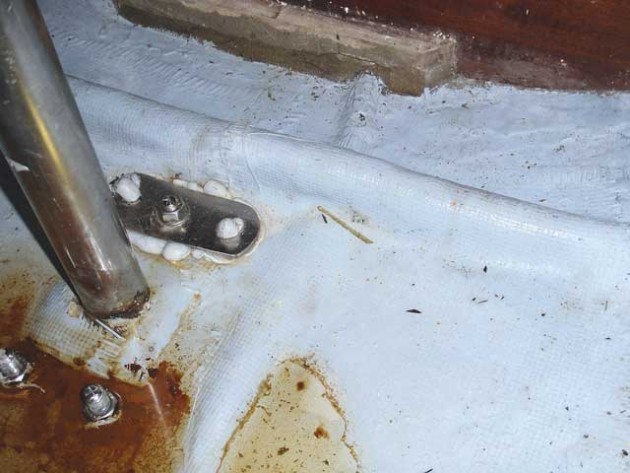
What to study: the important evidence is the pattern—a persistent keel/hull gap, rust weeps, disturbed fairing, laminate distortion, leaking bolts or cracked floors—not simply a cosmetic “keel smile.” Inspect outside while hauled and inside at every bolt, floor and sump surface. Image/source: Practical Boat Owner, “How to check keel bolts”.
Further learning: Study: WEST SYSTEM fiberglass and keel repair resources · Watch: WEST SYSTEM GRP structural repair demonstration
Why it matters for an ocean crossing
The keel carries enormous cyclic and grounding loads. A compromised keel attachment can leak, crack floors, distort the hull or, in the extreme, lose ballast and capsize the boat. Less dramatic defects still consume expensive yard time because proper diagnosis may require haul-out, interior access, bolt testing or dropping the keel. A cosmetic seam repair that hides movement is worse than an honest visible seam.
How age changes the answer
The age-band costs below are planning judgements derived from the unit and labor basis in “What it costs,” unless a source is named.
| Age at departure | What is normally justified | Typical cost |
|---|---|---|
| under 10 years | Inspect seam, bolts, sump and grounding history; do nothing if dry and stable. | $0–$1,000 |
| 10–20 years | Condition-led inspection; service iron-keel coating and seam only where needed. | $500–$5,000 |
| 20–30 years | Greater attention to hidden corrosion, weeping and repeated seam repairs; no automatic bolt renewal. | $1,000–$12,000 |
| over 30 years | Consider specialist testing/drop only when material, access, corrosion or movement supports it. | $2,000–$30,000+ |
There is no universal keel-bolt replacement interval. Lead keels with sound stainless/bronze fasteners, dry bilges and no impact evidence can remain safe for decades. Cast-iron keels commonly show surface rust without attachment failure. Insurers/surveyors may require correction of active seam cracks or corroded fasteners, but age alone rarely justifies dropping a keel. Doing nothing is correct when the joint is stable, bolt condition is credible, torque/engineering questions are resolved and floors/sump are sound.
Repair, service or replace
Service includes removing loose fairing/rust, treating an iron keel, renewing compatible seam sealant and fairing/coating. A superficial smile can be opened, inspected and repaired; merely painting over it proves nothing. Accessible nuts may be cleaned and protected. Retorquing is done only with builder/engineer specifications—randomly tightening old fasteners can damage laminate or studs.
Diagnosis can include dye penetrant on exposed stainless, ultrasonic testing of suitable bolts, torque observations, core samples or dropping the keel. Replacing one accessible stud may be possible; other designs require lowering the entire casting. Structural floor/sump repairs need an engineered laminate schedule before keel reinstallation and alignment.
What it costs
| Item | Unit | Bay Area 2026 |
|---|---|---|
| Survey haul observation | included | Standard pre-purchase survey plus haul fee |
| Open/repair minor stable seam | job | $1,500–$5,000 (judgement) |
| Strip/treat/fair cast-iron keel | job | $3,000–$8,000 (judgement) |
| Specialist bolt testing | visit | $1,000–$3,000 (judgement) |
| Travelift/crane | hour | $300 BMC posted |
| Drop, inspect and rebed keel | job | $12,000–$30,000 (judgement) |
| Replace keel bolts/studs | project | $10,000–$35,000+ (judgement; design/access) |
| Sump/floor structural repair | project | $8,000–$30,000+ (judgement) |
BMC charges $300/hour for travelift use and $140/hour composite/metal skill. Supporting a several-ton keel, moving tanks, fabricating stands and days ashore make “just inspect the bolts” expensive. Do not include a keel drop unless the evidence or insurer actually requires it.
What a pre-purchase survey tells you
- Covered by a standard survey — external seam/smile, impact scars, keel corrosion, accessible nuts/bolts, bilge weeping, sump/floor cracks and sounding/moisture around the attachment. The haul-out is separate logistics but the observation is core survey scope.
- Not covered — bolt removal, ultrasonic/dye testing beyond simple surface review, torque certification, keel lowering or engineering of cracked floors. A specialist costs roughly $1,000–$3,000 before yard work. Do it before purchase when there is material bolt corrosion, active leakage, a fresh unexplained seam repair, significant grounding or structural cracks.
What to ask
- The broker or owner — “Send all grounding, haul-out, keel-joint, keel-bolt, sump and floor repair invoices and before/during/after photos.” “State keel type and casting material from builder records.” “Have bolts ever been retorqued, tested or replaced, and under whose specification?”
- The surveyor — “Inspect the seam immediately at haul-out before washing if possible; map cracks and rust/weeping; examine every accessible fastener and the entire sump/floor load path; and distinguish fairing movement from evidence that requires specialist testing.”
What you can see yourself
Before the bottom is pressure-washed, look for rust or water tracks from the joint. Sight from bow and stern for a keel that appears skewed. Photograph every crack with a scale. Inside, dry the sump and return later for weeping. Look for dished washers, orange trails, cracked gelcoat radiating from floors, detached tabbing and fresh paint or sealant only around bolts. Ask where the inaccessible bolts are; “none there” may simply mean hidden by a tank.
Getting the estimate wrong
Do not equate a keel smile with keel loss, and do not dismiss it as cosmetic without checking the internal load path. Do not price keel bolts on an encapsulated keel. Cast-iron surface rust is not the same as stainless-bolt wastage. Avoid double-counting haul-out with hull, rudder and through-hulls. A keel drop should not appear as routine “20-year service.” Conversely, a cosmetic seam allowance is dishonest when floors are cracked or grounding damage exists.
Recommended learning and sources
- WEST SYSTEM repair selection guide — locate keel/fairing and structural-laminate procedures
- WEST SYSTEM repair resources covering keel and laminate damage
- Berkeley Marine Center travelift, composite and metal rates
- Berkeley Marine Center haul-out preparation
- ABYC standards-development overview
- Bay Area Marine Surveyor survey scope/rates