What it is
The hull shell keeps the sea out and carries rig, keel, rudder and machinery loads. A solid laminate is layers of fiberglass reinforcement in resin. A cored laminate sandwiches balsa, foam or another light core between inner and outer fiberglass skins; separating a skin from the core is delamination. Internal floors, stringers and bulkheads distribute loads. Tabbing is the fiberglass tape bonding those structures to the hull. Gelcoat is the thin cosmetic/water-resistant outer finish, not the primary structure.
Moisture-meter readings are comparative clues, not direct percentages of water. Antifouling, metal, carbon, salts and recent haul-out affect them. Osmotic blisters are fluid-filled gelcoat/laminate defects; they range from cosmetic surface work to deeper hydrolysis. A crack's location, direction and movement matter more than its appearance.
Owner learning layer
shell, core and internal load paths
Mental model
Fibers carry tensile load; resin holds fibers in geometry and transfers shear; a core separates skins to create stiffness with little weight. Bulkheads, floors and structural grids move concentrated mast, keel, rig and machinery loads into the shell. Gelcoat protects and finishes but is not the main structure. The right question about damage is always: what load acts here, which layer is affected, how far does it extend and is it still moving?
Tradeoffs
Solid laminate is heavy but tolerant of penetrations and easier to understand. Cored construction can be stiff and light, but water entry around fittings can destroy core adhesion or material while the outer skin looks acceptable. Balsa has excellent mechanical properties and conforms well but can rot when water reaches end grain; closed-cell foam resists rot but can still debond or crush. Molded liners/grids speed production and create clean interiors, yet may hide secondary bonds. These are design characteristics, not automatic defects.
Maintenance competence
Learn to distinguish gelcoat crazing, impact damage, osmotic blistering, delamination and structural cracking. Prevent water ingress at penetrations; when drilling a cored panel, use the appropriate core-isolation method rather than relying only on surface sealant. At each haul, inspect before painting and photograph repeat locations. Sounding and moisture mapping are comparative specialist tools; never convert one meter reading into a repair verdict. Any crack near keel floors, chainplates, rudder structure or bulkhead tabbing deserves a load-path investigation, not cosmetic filling.
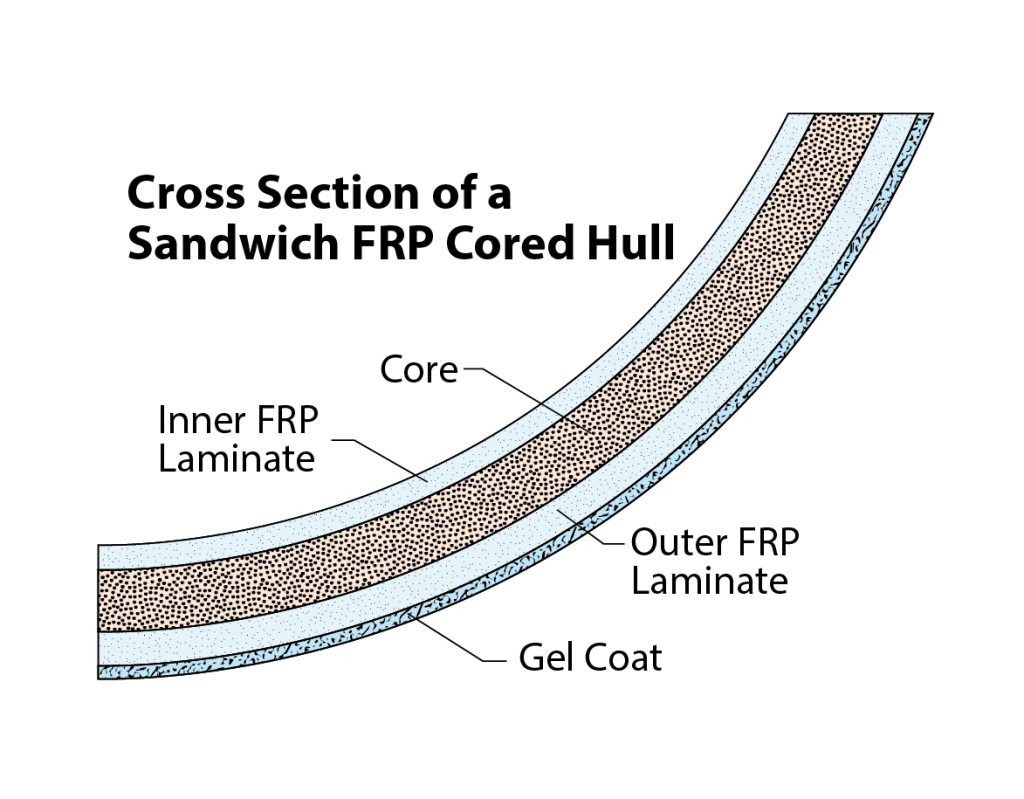
What to study: skins carry tension and compression while the core separates them and carries shear. Moisture, crushed core or a failed skin-to-core bond can remove much of that stiffness while the painted surface still looks acceptable. Image/source: Bahama Boat Works, sandwich-laminate cross-section.
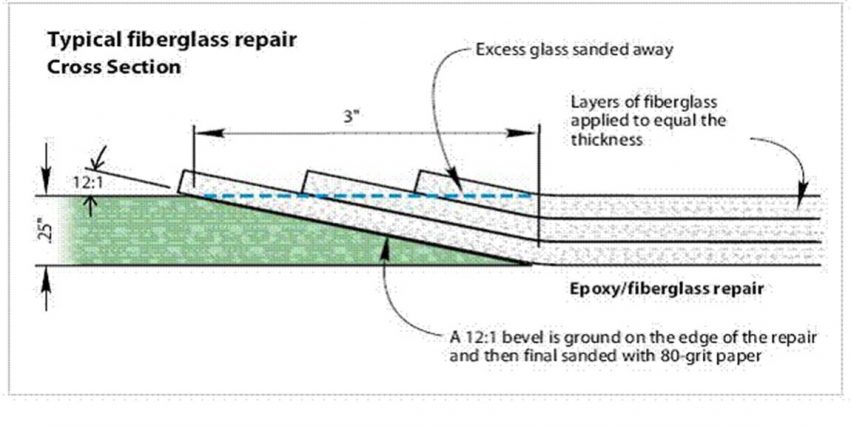
What to study: once opened, damaged core and separated skins are obvious; the buyer’s task is detecting them before destructive access through sounding, moisture patterns, deflection, cracking and repair history. Image/source: WEST SYSTEM, cored-laminate repair guidance.
Further learning: Study: WEST SYSTEM fiberglass repair resources · Watch: Replacing wet core in a fiberglass boat
Why it matters for an ocean crossing
Structural laminate failure can allow flooding or change how keel, rig and rudder loads enter the boat. Debonded bulkheads and floors let the hull flex. Prior grounding may crack floors or laminate well away from a visible keel scar. Widespread wet core increases weight and can destroy fastener holding. Cosmetic crazing is usually tolerable; a cracked structural load path is not.
How age changes the answer
The age-band costs below are planning judgements derived from the unit and labor basis in “What it costs,” unless a source is named.
| Age at departure | What is normally justified | Typical cost |
|---|---|---|
| under 10 years | Careful survey for build defects/impact; no preventive laminate work. | $0–$1,000 diagnostic |
| 10–20 years | Condition-led moisture/percussion map and repair of leaks/impact only. | $0–$5,000 typical localized work |
| 20–30 years | Expect cosmetic cracking and possible wet penetrations; investigate load paths and prior repairs. | $1,000–$15,000 |
| over 30 years | Age raises probability, not a replacement rule; scope ranges from nothing to uneconomic reconstruction. | $2,000–$50,000+ |
Fiberglass has no simple expiration date. Water entry, impact, poor bonding and flex are decisive. Doing nothing structurally is correct for a dry, well-built 40-year-old hull; a new hull damaged by grounding can need major reconstruction. Surveyors and insurers care about current structural findings and repair documentation more than a calendar threshold.
Repair, service or replace
First stop the water source or load causing damage. Small solid-laminate damage is ground back to sound material and rebuilt with correctly oriented glass/resin. Cored repair requires removing damaged skin/core, drying or replacing core, rebonding and restoring laminate. Injecting resin into a wet, rotten core is not automatically an adequate structural repair.
Blisters may be monitored, locally repaired or—when widespread/deep—peeled/dried/barrier-coated. Bulkhead or floor tabbing is repaired to an engineered schedule with clean access and correct taper. Whole-hull replacement is not a normal option; major structural defects affect whether to buy the boat at all.
What it costs
| Item | Unit | Bay Area 2026 |
|---|---|---|
| Standard fiberglass pre-purchase survey | per foot | $28–$35 locally posted range around 40ft |
| Focused moisture/percussion mapping | visit | $500–$1,500 (judgement) |
| Composite technician | hour | $140 BMC posted |
| Small laminate/gelcoat repair | location | $500–$2,500 (judgement) |
| Local cored repair, roughly 1–4sq ft | area | $2,000–$8,000 (judgement) |
| Bulkhead/tabbing repair | location | $3,000–$15,000 (judgement) |
| Widespread bottom blister treatment | boat | $15,000–$35,000 (judgement) |
| Major grounding/structural reconstruction | project | $20,000–$75,000+ (judgement) |
Area alone does not price composite work. Access, interior demolition, drying time, core geometry, finish matching and engineering dominate. BMC posts $140/hour for composite technicians; use that to test whether a low lump-sum estimate is plausible.
What a pre-purchase survey tells you
- Covered by a standard survey — visual/percussion examination of accessible hull, moisture-meter sampling, cracks/blisters, visible repairs, accessible tabbing/stringers/floors and haul-out inspection. A good survey records a pattern, instrument and conditions, not a single magic moisture number.
- Not covered — removing liners, drilling/core samples, destructive testing, ultrasound/thermography, laminate engineering and hidden repair verification. Focused non-destructive testing may cost $500–$2,000; destructive samples and naval-architect/composite review more. Do it before purchase when there is a broad anomalous map, flex, unexplained repair, impact or cracked load path.
What to ask
- The broker or owner — “Send every grounding/collision/insurance claim and structural repair invoice, including photos before, during and after repair and laminate schedule.” “Identify hull laminate/core by area from builder documentation.” “Has water entered floors, stringers or core, and how was it proven dry?”
- The surveyor — “Map rather than spot-check moisture and percussion; identify instruments/conditions; inspect floors, stringers, bulkhead tabbing and known model load paths; distinguish cosmetic gelcoat from structural laminate; and recommend destructive or specialist testing only where evidence supports it.”
What you can see yourself
Sight along the hull in low-angle light for unfair patches. Tap gently with a plastic screwdriver handle and listen for a change from crisp to dull; this is comparative, not a verdict. Inside, use a bright light around floors and bulkheads for separated tabbing edges, white stress fibers, cracks that continue through structure, water trails and fresh paint hiding one area. Push on suspicious panels while someone watches the opposite skin. At haul-out, inspect the keel zone, rudder area and sling points first.
Getting the estimate wrong
Do not call all high moisture “wet core,” especially on solid hulls or near metal. Do not call every gelcoat crack structural. Conversely, do not price cosmetic fairing over moving cracks. Separate hull shell from deck core, keel joint and rudder blade. Avoid multiplying one yard's hourly rate by an invented repair area without access and laminate schedule. A standard survey already includes non-destructive hull observations; do not double-count a generic moisture inspection unless the specialist scope is genuinely deeper.