What it is
A through-hull is the fitting passing through the hull for a drain, intake or discharge. A seacock is the robust shutoff valve directly attached to, or integral with, that hull penetration and mounted so it can withstand hose loads. A flanged seacock bolts to a backing plate. A simple inline plumbing ball valve screwed onto a through-hull may not provide equivalent structural support. A tailpiece connects hose; double clamps are commonly used where appropriate below the waterline.
Materials include marine bronze, glass-reinforced composite such as Marelon and sometimes approved stainless. Ordinary brass can dezincify: zinc leaches out, leaving weak pink/red porous copper. A backing plate spreads load and provides a stable flat mounting surface. A tapered wooden plug tied near each opening is emergency damage control.
Owner learning layer
every hole below the waterline
Mental model
A through-hull passes water; the seacock must stop it; the backing and hull must carry hose and impact loads; the hose, tailpiece and clamps must preserve the boundary. Trace every penetration to its appliance and label its normal position. Remember the maximum heeled waterline: a fitting that looks above water at the dock may be below it under sail.
Tradeoffs
Proper marine bronze is strong and familiar but can dezincify or suffer galvanic effects if materials and bonding are wrong. Approved reinforced composite avoids corrosion and electrolysis but must be installed without over-torque and protected from impact/fire per its design. Stainless can be suitable in specific approved installations but stagnant, oxygen-poor seawater creates crevice-corrosion concerns. A flanged seacock with strong backing is mechanically superior to a household ball valve balanced on pipe threads. Reducing the number of holes reduces flooding paths, but combining plumbing can introduce siphon and cross-flow problems.
Maintenance competence
Build a numbered diagram and photograph each valve. Exercise them on the maker’s schedule, never force a seized handle, and inspect hose condition, barb engagement, clamp material/orientation, backing and any pinkness or weeping. Know which valves stay closed when unattended and how to access them in darkness. Tie a correctly sized plug at each penetration and practice reaching it. At haul-out inspect exterior fittings and strainers. If a valve cannot be operated quickly, is unsupported, uses suspect brass or has inaccessible hose, treat that as a safety defect rather than cosmetic deferred maintenance.
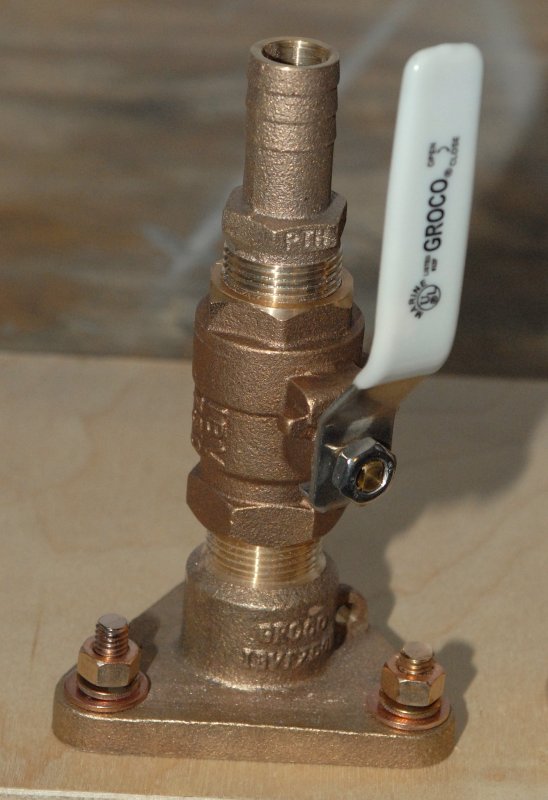
What to study: the robust installation has a flanged seacock mechanically secured to the hull or backing block; the poor example relies on mismatched straight and tapered pipe threads and has little structural support. Inspect material compatibility, backing, fasteners, handle access, hose barbs and double clamps—not just whether the valve turns. Image/source: Compass Marine, “Replacing Thru-Hulls and Seacocks”.
Further learning: Study: Forespar Marelon valve maintenance · Watch: Forespar Marelon seacock installation
Why it matters for an ocean crossing
Every below-waterline opening is a potential flooding path. A frozen valve cannot isolate a split hose; a weak fitting can snap when kicked or loaded by stores. Sink/head drains near the heeled waterline can backflood if poorly looped. Offshore repair may require plugging from inside or outside while the boat is moving.
How age changes the answer
The age-band costs below are planning judgements derived from the unit and labor basis in “What it costs,” unless a source is named.
| Age at departure | What is normally justified | Typical cost |
|---|---|---|
| under 10 years | Exercise, inspect material/support/hoses; do nothing if correct and operable. | $0–$500 |
| 10–20 years | Service stiff valves, replace suspect hose/clamps or unsupported fittings conditionally. | $300–$3,000 |
| 20–30 years | Material identification and dezincification/support become important; no blanket replacement. | $1,000–$6,000 |
| over 30 years | Budget replacement for original brass/gate valves or compromised backing; retain sound bronze/composite. | $2,000–$10,000+ |
Forespar tells owners to operate Marelon valves at least four times per year; it does not give an age-expiry rule. Sound bronze and Marelon can last decades. Gate valves, household valves, seized handles, pink brass, cracked polymer, rotten backing or inaccessible operation justify work. Doing nothing is right when each valve is approved material, supported, exercises fully and its hose/loop/clamps are sound.
Repair, service or replace
Service by regular operation and manufacturer-approved lubrication/maintenance. Replace hoses and clamps independently when valves are good. A handle or seal kit may repair a serviceable valve. Do not force a seized valve hard enough to break the fitting while afloat.
Replacement requires haul-out for below-waterline fittings. Remove the old assembly, inspect/repair laminate and core, install a sound backing plate, bed the through-hull, bolt the flanged seacock and add correct tailpiece/hose/clamps. Replacing all fittings is honest when they are systemically wrong material/type or inaccessible and original—not simply because the boat is old.
What it costs
| Item | Unit | Bay Area 2026 |
|---|---|---|
| Marelon flanged seacock, 1/2–3/4in | part | $73.95–$78.95 posted |
| Marelon flanged seacock, 1-1/2in | part | $174.95 posted |
| Through-hull/tailpiece/backing/clamps | opening, parts | $100–$350 (judgement) |
| Exercise/service accessible valve | each | $100–$300 (judgement) |
| Replace straightforward seacock | each, installed | $800–$1,800 (judgement) |
| Difficult/cored/inaccessible opening | each, installed | $1,500–$3,000 (judgement) |
| Replace 6–10 openings | project | $6,000–$15,000 (judgement; shared haul) |
| Haul/lay days | event | count once across underwater systems |
The valve part is a small fraction of installed cost. Access, cabinetry, hose routing, sanitation cleanup and core repair dominate. Berkeley posts $140/hour skilled labor and $300/hour travelift.
What a pre-purchase survey tells you
- Covered by a standard survey — count/location, apparent material/type, operation of accessible valves, backing, bonding where applicable, hose/clamps and external through-hull condition at haul-out. Surveyors generally do not dismantle them.
- Not covered — alloy analysis, destructive backing-plate inspection, removing hoses/valves or pressure testing inaccessible assemblies. A separate specialist is rarely needed; haul survey plus clear access is normally enough. Obtain yard scope before purchase when multiple valves are seized, gate valves, pink, cracked or visibly unsupported.
What to ask
- The broker or owner — “Send invoices listing every through-hull/seacock replaced, material, size and date.” “Which valves cannot be reached or operated immediately?” “Have any leaked, broken or been plugged?” “Please provide photos of the complete valve/backing/hose assembly, not only the exterior mushroom.”
- The surveyor — “Locate and exercise every seacock with owner permission, identify gate/inline valves versus flanged seacocks, inspect backing and hose loops/clamps, and correlate each inside valve with the exterior fitting at haul-out.”
What you can see yourself
Make a sketch and find every valve. Move handles gently through 90 degrees; the handle should not flex independently. Scrape an inconspicuous bronze area lightly—pink/red porous metal is suspect. Push the hose sideways and watch whether the whole fitting moves. Check for green crust, cracks, rotten plywood, one rusty clamp or a tailpiece with little hose engagement. Confirm a correctly sized softwood plug is tied at each opening. Never aggressively test a questionable old fitting afloat.
Getting the estimate wrong
Plastic does not automatically mean unsafe: approved Marelon is purpose-made; hardware-store PVC is different. Brass does not automatically mean marine bronze. Do not replace all seacocks by age if sound and supported, and do not cost only $175 of hardware for a $1,500 access job. Avoid counting sanitation hose here and again in plumbing. A ball valve is not necessarily a seacock. Assign the shared haul-out once.
Recommended learning and sources
- Forespar’s explanation of what makes a seacock, with material and installation context
- ABYC standards program, including H-27 Seacocks and Through-Hulls
- Forespar Marelon flanged-seacock prices and installation concept
- Forespar valve maintenance: operate at least four times yearly
- Forespar through-hull product guidance
- Berkeley Marine Center labor and travelift rates